
How a Good Sauna Is Built: Ceiling, Benches and Air
Three details decide how the heat feels: the height of the ceiling, the height of the benches, and how the air moves.
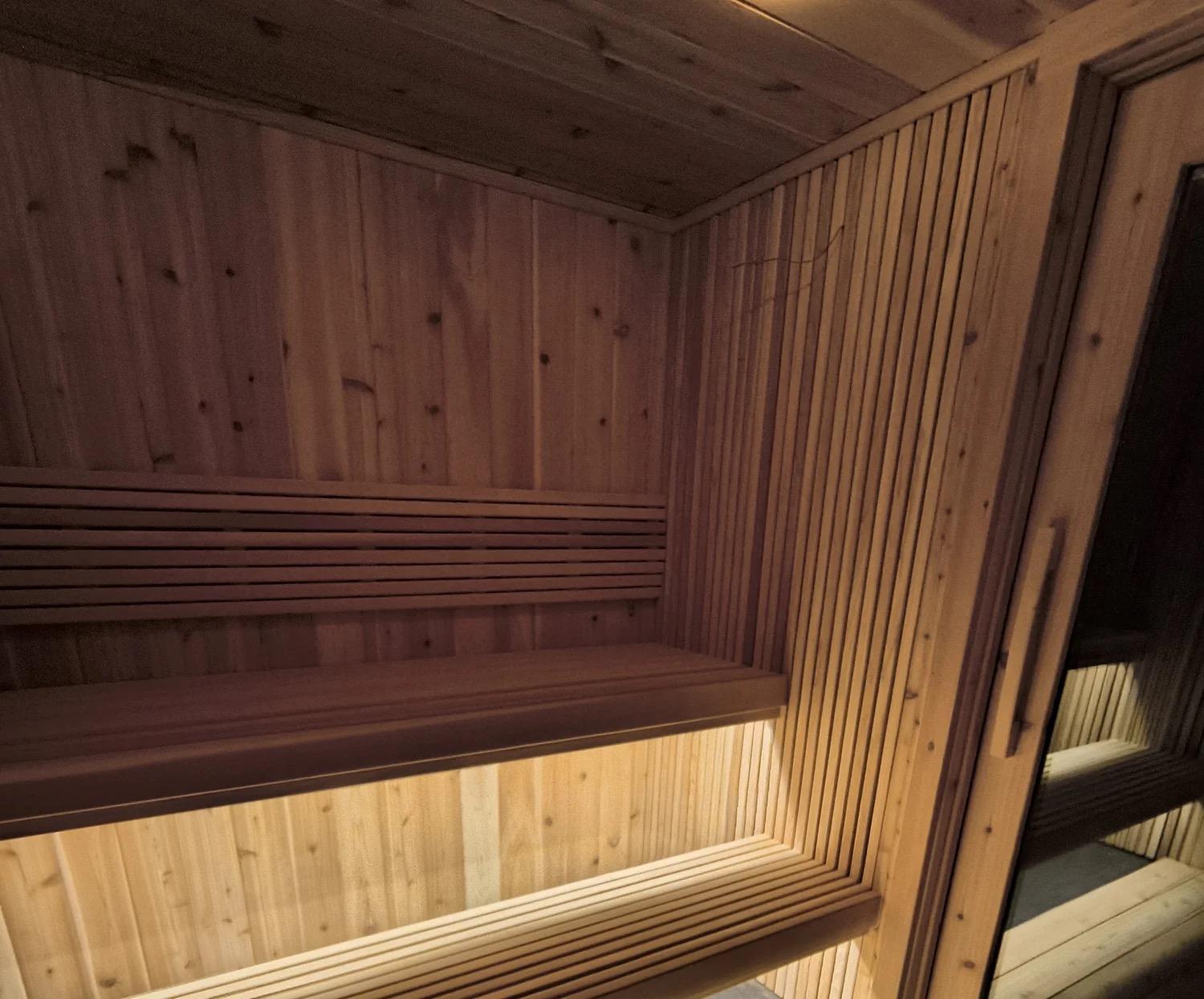
Heat rises, so height matters
Hot air collects at the top of the room. If the ceiling is too low, that hot layer is thin and you feel it only on your head and shoulders. Most saunas that work well have a ceiling between 7 and 8 feet, which leaves room for the heat to gather and for a bench set high enough to sit in it.
Feet above the stones
The rule builders go by: when you sit on the upper bench, your feet should be at or above the top of the heater's stones. That puts your whole body in the warm air. Benches set too low give you a hot head and cold feet, however strong the heater is.
The lower bench is a step up and a cooler seat. The upper bench is where you take the heat.
Fresh air in, cool air out
A sauna needs slow, steady air movement. Fresh air comes in low near the heater, warms, rises and crosses the room. Cooler air leaves through a vent low on the opposite side, often under the bench.
A vent placed too high lets the heat escape at the ceiling. No exhaust vent at all leaves the air stale and the floor cold.
What to look for
- Insulated walls and ceiling
- An upper bench that sits high in the room
- A heater sized to the room
- A low exhaust vent across from the heater
- Wood that stays comfortable to the touch, such as cedar
In an Urban Sauna
Urban Sauna builds every hot room with mineral wool insulation, cedar seating with a backrest, LED lighting under the bench and a heater sized to the room. Each one is built by hand in New Brighton, Minnesota.